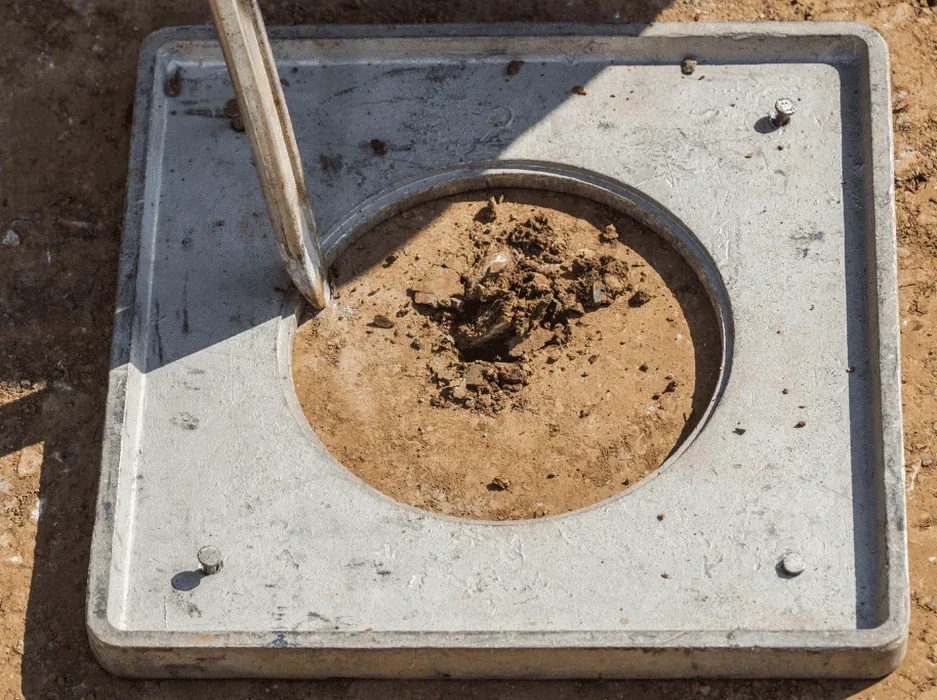
Drillers in Thunder Bay know the feeling—you hit saturated fine sand at 6 meters and the sample practically flows out of the spoon. That loose, water-charged material is exactly what keeps geotechnical engineers up at night. The city sits on a complex mix of glaciolacustrine silts and deltaic sands deposited by the ancient Lake Agassiz and modern lacustrine processes. When you combine these loose granular soils with the seismicity of the Lake Superior rift zone, you get a genuine liquefaction hazard. Our team runs site-specific seismic microzonation studies alongside field testing to map risk zones before the first shovel hits the ground. We correlate standard penetration data from deep boreholes with laboratory cyclic triaxial results to give project owners a clear picture of what happens when the ground shakes.
In Thunder Bay, a clean-looking silt can liquefy just as easily as loose sand once the excess pore pressures build up.
Site-specific factors
The CPT rig rolls onto a Thunder Bay site—a 20-tonne truck with a hydraulic pushing system that drives a 15 cm² cone at 2 cm per second into the ground. The cone tip resistance, sleeve friction, and pore water pressure are recorded every 10 millimeters. In a liquefaction assessment, the raw data tells a story: a sudden drop in tip resistance paired with a spike in pore pressure at 4.2 meters depth signals a loose layer that will collapse under cyclic loading. We pair this with downhole shear wave velocity testing, where a seismic cone measures Vs directly. When Vs drops below 200 m/s in a saturated granular unit, we flag it for cyclic laboratory testing. The risk for Thunder Bay projects is real—a magnitude 5.5 event on the Midcontinent Rift structure could generate enough cyclic stress to trigger flow liquefaction in the silty fill along the Kaministiquia River delta.
Reference standards
NBCC 2020 (National Building Code of Canada, seismic provisions), CSA A23.3-19 (Design of Concrete Structures, seismic detailing), ASTM D6066-11 (Standard Practice for Determining the Normalized Penetration Resistance of Sands for Evaluation of Liquefaction Potential), ASTM D5311-13 (Standard Test Method for Load Controlled Cyclic Triaxial Strength of Soil)
Common questions
What does a soil liquefaction analysis cost for a typical commercial project in Thunder Bay?
For a standard commercial or light industrial site in Thunder Bay, a complete liquefaction assessment—including two deep boreholes with SPT, a CPT sounding, laboratory cyclic triaxial on selected samples, and the engineering report—typically ranges from CA$3,130 to CA$5,010. The final cost depends on site access, overburden depth, and the number of critical layers we need to test.
Does Thunder Bay really have enough seismic risk to justify a liquefaction study?
Yes, and the NBCC 2020 reflects this. While Thunder Bay is not on the West Coast, the Lake Superior rift zone and the Midcontinent Rift structure generate moderate seismicity. A magnitude 5.2 event occurred near Nipigon in 2010, and paleoliquefaction features have been identified in post-glacial sediments in the region. Loose saturated silts at Site Class D or E conditions can liquefy at PGA values as low as 0.08g.
What soil types in Thunder Bay are most susceptible to liquefaction?
The glaciolacustrine silts and fine sands deposited in the former Lake Agassiz basin, particularly in the flat areas south of the Neebing River, are the most problematic. These soils often have 15 to 35 percent fines, low plasticity, and SPT N-values below 10 in the upper 10 meters. The loose hydraulic fill placed along the waterfront historically is also a concern.
How do you handle a site that shows a liquefaction hazard?
We don't just flag the problem and walk away. If the FSL is below 1.1, we calculate settlement and lateral displacement potential, then work with your structural engineer on options: deeper foundations bearing on till or bedrock, ground improvement via stone columns or compaction grouting, or structural design to accommodate the predicted settlement. The mitigation strategy is always tailored to the structure importance category as defined in NBCC 2020.