← Home · In-Situ Testing

Field Permeability Testing (Lefranc/Lugeon) in Thunder Bay

Together, we solve the challenges of tomorrow.

LEARN MORE →

The National Building Code of Canada references critical groundwater control measures that depend entirely on accurate field permeability data. In Thunder Bay, a city shaped by the massive erosive forces of the Lake Superior basin, these measurements become more than a specification—they are a project survival tool. The heterogeneous mix of glaciolacustrine silts, ablation tills, and occasional sand lenses across the city means groundwater flow rarely behaves as predicted by desk studies alone. A field permeability test (Lefranc/Lugeon) provides the direct hydraulic conductivity values needed to calibrate dewatering systems and assess cutoff wall effectiveness. Our technical team deploys these in-situ procedures to support open-cut excavations and deep foundation design, often pairing them with deep excavation monitoring to validate drawdown predictions against real-time pore pressure data during construction near the Kaministiquia River delta.

A single Lugeon stage in fractured Shield rock can reveal more about potential grout consumption than a dozen core logs.

Process and scope

A recent investigation for a proposed stormwater management facility near the Intercity area illustrated why these tests are non-negotiable in Thunder Bay. The initial boreholes suggested a uniform low-permeability silty-clay matrix suitable for an earthen retention structure. However, during the drilling of a permanent observation well, the team encountered a distinct drop in the rod string at 8 meters—a classic sign of a thin, gravelly interbed hidden within the till. A Lugeon test was immediately configured, injecting water under five pressure stages. The calculated Lugeon value exceeded 25, indicating an open fracture or a high-permeability lens capable of creating a preferential flow path under the north shore embankment. This finding, invisible to standard sampling, redirected the earthworks design toward a composite liner solution. In the geological context of Thunder Bay, the Lefranc method provides the variable-head data needed in fine-grained soils, while the Lugeon method quantifies rock mass permeability in the underlying Precambrian Shield, often required when evaluating mat foundation drainage for large-footprint institutional buildings on the Lakehead University campus.
Field Permeability Testing (Lefranc/Lugeon) in Thunder Bay
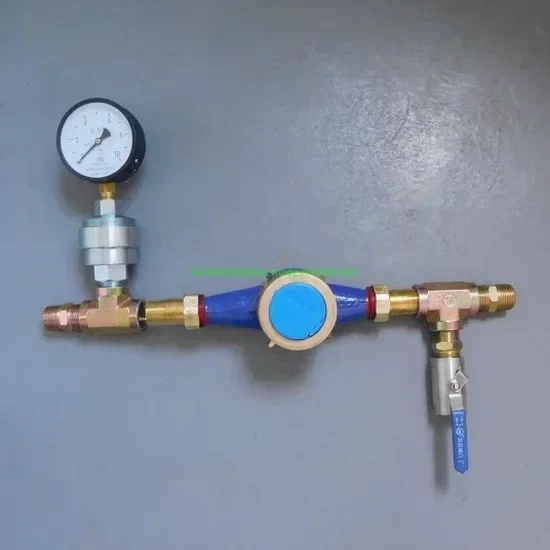
Technical reference image — Thunder Bay

Site-specific factors

Thunder Bay sits at the northern edge of the Great Lakes snowbelt, where a rapid spring melt combined with Lake Superior's thermal lag creates a prolonged high-groundwater period from late March through June. The city's geomorphology features buried bedrock valleys infilled with soft, compressible sediments that act as artesian aquifers when charged by the nor'wester storms rolling off the lake. If field permeability testing is omitted, the assumed hydraulic conductivity for a dewatering design can be off by an order of magnitude, leading to base instability in a shored excavation along the reconstructed Harbour Expressway. The cost of a flooded excavation or a collapsed shoring system dwarfs the investment in a properly executed Lugeon test in the over-consolidated Port Arthur till. The team integrates the results with CPT testing to correlate pore pressure dissipation curves with the actual mass hydraulic conductivity, ensuring the groundwater model reflects the layered reality of the site.

Need a geotechnical assessment?

Reply within 24h.

Email: [email protected]

Reference parameters

ParameterTypical value
Lefranc Test Depth RangeTypically 3 to 30 m below ground surface, dependent on auger refusal
Lugeon Test Pressure StagesUp to 1 MPa (145 psi), applied in 5 increments per Houlsby method
Applicable Soil/Rock TypesLefranc for fine-grained tills; Lugeon for fractured Shield bedrock
Measured Conductivity Range1 x 10⁻⁷ to 1 x 10⁻² cm/s depending on test section lithology
Test Interval LengthStandard 3.0 to 6.5 m packer spacing in NQ core holes
Injection MethodConstant head (Lefranc) or multi-stage pressure (Lugeon) via wireline packer

Related services

01

Lefranc Variable-Head Test in Overburden

We perform Lefranc tests in hollow-stem augered boreholes through the glaciolacustrine deposits common to the Thunder Bay lowlands. The procedure involves isolating the test section with a pneumatic packer, applying a known head, and monitoring the rate of fall to calculate the coefficient of permeability (k). This data directly informs groundwater control plans for sewer trunk installations along the Neebing River floodway.

02

Lugeon Packer Test in Precambrian Bedrock

For projects encountering the Canadian Shield at depths below 15 meters—such as the deep foundations required for the proposed waterfront developments on the Lake Superior shoreline—we execute multi-stage Lugeon tests. Using a wireline packer system within NQ core holes, we measure the water take at five ascending and descending pressure steps to differentiate between laminar flow, turbulent flow, and hydraulic fracturing of the jointed meta-volcanic rock.

Applicable standards

ASTM D4630-19 (Standard Test Method for Determining Transmissivity of Low-Permeability Rocks), ASTM D6391-11 (Standard Test Method for Field Measurement of Hydraulic Conductivity), CSA A23.3:19 (Design of Concrete Structures, referenced for watertightness criteria in deep foundations), Ontario Building Code (OBC) Division B, Part 4 (Structural Design, groundwater considerations), MTO Laboratory Testing Manual LS-700 Series

Common questions

What is the typical cost for a Lefranc or Lugeon test in Thunder Bay?

Field permeability testing in the Thunder Bay area generally ranges from CA$830 to CA$1,310 per test interval, depending on the depth, casing requirements, and whether the test is performed in overburden (Lefranc) or bedrock (Lugeon). The final figure reflects the mobilization distance to sites across the Thunder Bay District and the time required for pressure stabilization in the low-permeability silts typical of the region.

When is a Lugeon test required instead of a standard Lefranc test?

A Lugeon test is specified when the investigation encounters fractured or jointed bedrock, which is a common occurrence once drilling passes through the glacial drift and hits the Precambrian Shield in Thunder Bay. The Lugeon method applies multiple pressure stages to evaluate the rock's hydraulic conductivity and dilation behavior, essential for designing grout curtains, rock anchor bond zones, or assessing leakage potential beneath a proposed dam or cofferdam.

How does the local geology of Thunder Bay affect permeability test results?

The local geology presents a two-layer system: a thick sequence of glaciolacustrine clays and rhythmites deposited by glacial Lake Agassiz and postglacial Lake Superior, overlying the fractured Logan diabase sills and Archean granite. Permeability contrasts can be extreme—the clay matrix may exhibit values as low as 10⁻⁷ cm/s, while an open fracture in the diabase could exceed 10⁻² cm/s. This variability requires careful test interval selection and often leads to the integration of Lefranc data in the overburden with Lugeon results in the underlying rock.
Location and service area

We serve projects in Thunder Bay and surrounding areas.

View larger map