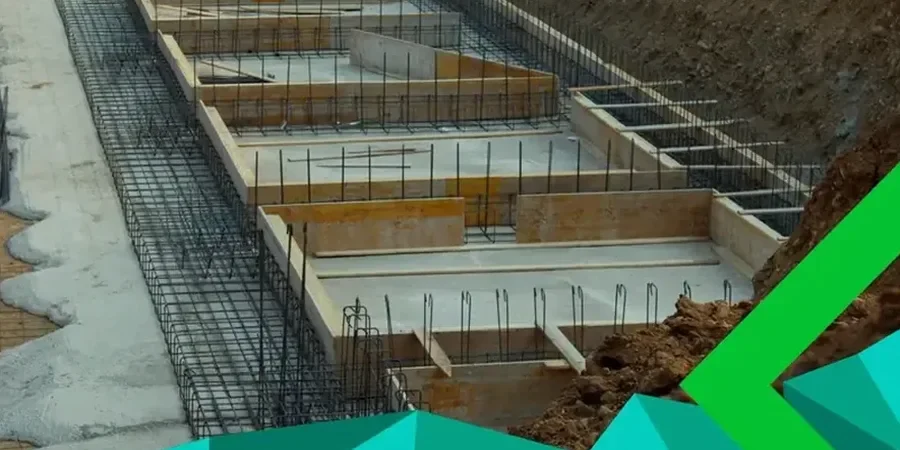
A few winters back, we got called out to a site just off Golf Links Road where a planned commercial building kept running into unexpected groundwater during excavation. The initial assumption was straightforward bearing on a sandy till, but the reality was a layered sequence of glaciolacustrine silts that softened dramatically when saturated. Shallow foundation design in Thunder Bay frequently demands that kind of rapid field reassessment. The city sits perched on the southern edge of the Canadian Shield, but the overburden is a complex mix of varved clays, deltaic sands, and bouldery tills deposited by glacial Lake Agassiz. That geological history means the ground can change within fifty meters — one footing excavation hits compact till, the next one finds compressible clay. We lean heavily on correlations between field tests and lab index properties. Before committing to a final bearing pressure, we often pair our in-situ work with a well-placed test pit program to observe stratification directly, and we validate those observations against Atterberg limits to confirm clay behavior under changing moisture conditions. Getting the foundation right from the start avoids the kind of differential settlement that turns a profitable project into a legal headache.
The biggest money lost on shallow foundations isn't in the concrete — it's in the re-excavation when the bearing surface turns out softer than assumed.
Process and scope
The tool that resolves most of our Thunder Bay shallow foundation design challenges is the instrumented plate load test, but we also rely heavily on continuous sampling with a track-mounted SPT rig that can handle the bouldery till without getting bounced around. When we mobilize to a site near the Neebing River floodplain or up toward the airport, the first priority is understanding how the seasonal frost penetrates the upper meter and a half. Frost depth here reaches roughly 1.8 meters, and ignoring that in a footing elevation decision is asking for trouble come March thaw. We drill, sample, and log every run, noting where the gray varved clay transitions to reddish-brown oxidized till. The data feeds directly into bearing capacity calculations under NBCC 2015 Part 4, where we apply reduction factors for eccentricity and inclination that reflect the actual column loads. In many cases, a conventional strip footing works beautifully if the bearing stratum is consistent; where we hit soft pockets, we discuss transitioning to a
mat foundation design that bridges those weak zones and distributes the load without requiring deep excavation. The design output is a set of drawings that a local crew can actually build — reinforcement details are practical, concrete cover respects CSA A23.3 exposure class, and key dimensions are checked against the frost protection requirements that every Thunder Bay contractor knows by heart.
Site-specific factors
Thunder Bay sits in a moderate seismic zone according to the NBCC 2015 seismic hazard maps, with a spectral acceleration Sa(0.2) around 0.28 in the southern part of the city. That is not Vancouver-level shaking, but it is enough to trigger a liquefaction assessment in saturated loose sands and silts, especially in the low-lying areas near the Kaministiquia River delta where the water table sits barely a meter below grade. The bigger day-to-day risk we see on projects, though, is differential settlement across a single building footprint. When a footing pad straddles a transition from stiff clay to loose deltaic sand, even a well-designed bearing pressure produces uneven compression over time. Add the seasonal freeze-thaw cycles that rework the upper soil structure, and you get a progressive loss of contact that shows up as cracked partition walls within the first three years. A shallow foundation design that only checks ultimate bearing capacity without running a settlement sensitivity analysis is incomplete, and the Ontario Building Code expects the designer to demonstrate that total and differential movements stay within tolerable limits for the specific structural system.
Common questions
How long does it take to get a shallow foundation design package for a Thunder Bay project?
For a typical commercial or light industrial building, we aim to deliver the geotechnical report and sealed foundation drawings within three to four weeks after completing the field investigation. The field work itself usually takes one to two days on site, and the lab testing — grain size, Atterberg limits, and any required triaxial or consolidation tests — adds about ten business days. We can expedite the reporting if the contractor has already mobilized and needs bearing pressures quickly; in that case, we issue a preliminary letter with design recommendations within a few days of the field work.
What does shallow foundation design cost for a project in the Thunder Bay area?
For a straightforward project — say, a single-storey commercial slab-on-grade or a small multi-unit residential building with strip and pad footings — the combined geotechnical investigation and shallow foundation design package typically runs between CA$2,900 and CA$4,100. The exact number depends on how many boreholes or test pits are needed, whether we need to run specialized lab tests like consolidation or triaxial, and the complexity of the structural loading. We provide a fixed-fee proposal after reviewing the architectural plans so there are no surprises.
Can you design shallow foundations on the clay soils that are common in Thunder Bay?
Yes, and we do it regularly. The varved clays and glaciolacustrine silts that cover much of the city are moderately compressible, which means the design has to be governed by settlement rather than bearing capacity failure. We focus on limiting total and differential settlement to values the structure can tolerate — typically 25 mm total and 1/500 angular distortion for conventional framed buildings. Where the clay layer is thick and loads are heavy, we may recommend a stiffer mat foundation or ground improvement rather than pushing a conventional footing design beyond what the soil can reasonably support.