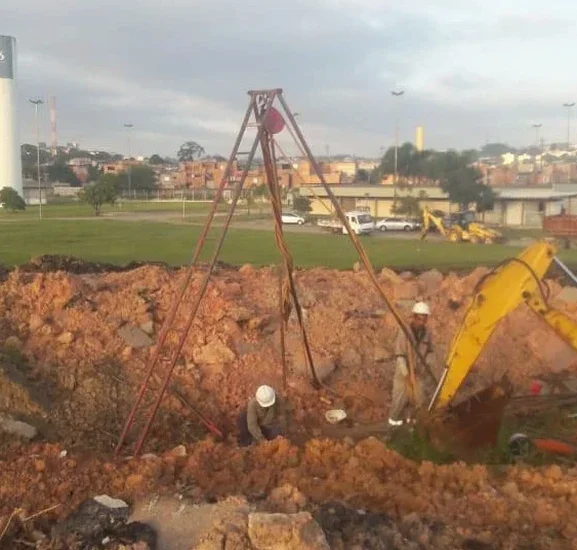
Thunder Bay contractors know the problem. You excavate and hit a grey, sticky clay that pumps under load. Is it a lean clay or a fat clay? Atterberg limits testing gives the answer fast. This test measures the water contents where a soil changes from solid to plastic to liquid. In a city built on glacial Lake Agassiz sediments, these transitions matter. They control swell potential, frost susceptibility, and bearing capacity collapse. Without them, you are guessing on foundation design. Our lab on the North Shore runs Atterberg limits per ASTM D4318. We pair it with grain size analysis when fines content exceeds 50%. Results are ready within 24 hours for standard samples. For urgent projects near the waterfront, same-day turnaround is available.
Plasticity index is the single best predictor of cohesive soil behavior under moisture change in Thunder Bay's glacial clays.
Reference standards
ASTM D4318 – Standard Test Methods for Liquid Limit, Plastic Limit, and Plasticity Index of Soils, ASTM D2487 – Standard Practice for Classification of Soils for Engineering Purposes (Unified Soil Classification System), CSA A23.3 – Design of Concrete Structures (frost heave considerations for foundations), Ontario Building Code (O.Reg. 332/12) – geotechnical investigation requirements
Common questions
How much does Atterberg limits testing cost in Thunder Bay?
Atterberg limits testing (liquid limit, plastic limit, plasticity index) costs CA$100 to CA$150 per sample in Thunder Bay. The price depends on sample condition and whether you need the full multipoint liquid limit or a one-point correlation. Rush turnaround may add a surcharge.
What soil types need Atterberg limits testing?
Any fine-grained soil with more than 50% passing the No. 200 sieve requires Atterberg limits. Silts and clays are the primary targets. In Thunder Bay, varved clays, glacial lake sediments, and weathered shale all need this test for proper classification.
How long does the test take to run?
Standard turnaround is 24 hours from sample receipt. The test itself requires oven-drying stages that cannot be shortened. For urgent projects, we offer same-day reporting if samples arrive before 10:00 AM. Large batches may take up to 48 hours.
What is the difference between liquid limit and plastic limit?
The liquid limit is the water content where soil transitions from plastic to liquid behavior. We measure it with the Casagrande cup at 25 blows. The plastic limit is the lower water content where soil crumbles when rolled to a 3 mm thread. The difference between them is the plasticity index, which indicates the sensitivity of the soil to moisture changes.