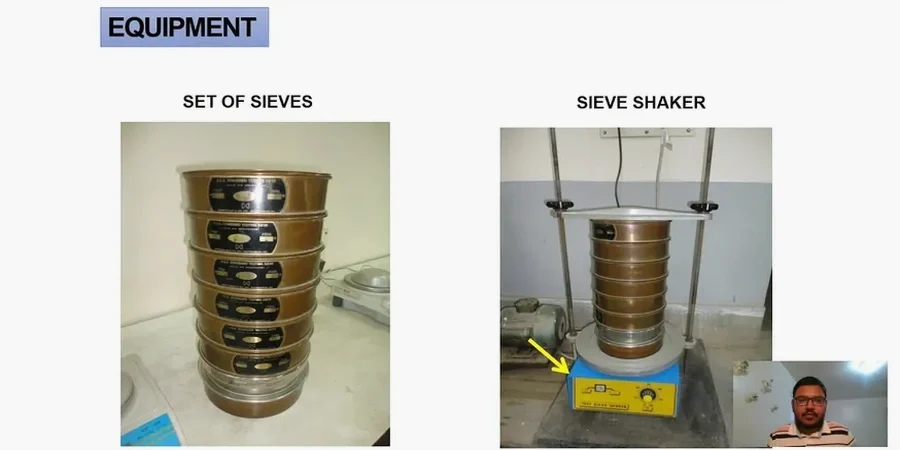
The glacial lake clays around Thunder Bay hold water like a sponge. When saturated, these fine-grained deposits shift their behavior entirely. A standard compaction test alone won't tell you what you need. The grain size curve from a full sieve and hydrometer analysis according to ASTM D422 reveals the silt and clay fractions controlling permeability and frost action. On the city's north side, where the Superior shoreline meets compact till, the distribution changes meter by meter. We run the full stack: wash sieving for the coarse fraction, hydrometer for the fines, and a test pits log to tie the sample to its exact stratum. Without this data, drainage design on the Kam River floodplain is just a guess.
A single hydrometer reading on Thunder Bay varved clay can predict frost heave potential better than three boreholes without gradation.